Dometic AC Troubleshooting Guide: An Overview
Navigating Dometic AC issues requires a systematic approach, from electrical checks to cooling performance and thermostat diagnostics, ensuring comfortable RV living.
Common concerns include leaks, fan malfunctions, and capacitor failures, often discussed in RV forums regarding Dometic 320 toilets and thermostat connections.
Understanding Your Dometic AC Unit
Dometic air conditioning units are prevalent in RVs, offering climate control during travel and stationary use. These systems typically comprise a compressor, condenser, evaporator, and a thermostat for temperature regulation. Familiarizing yourself with these core components is crucial for effective troubleshooting.
Older installation instructions, dating back to 1995, suggest a degree of consistency in the fundamental installation procedures, though updated versions may exist. Understanding the unit’s age and model is vital. The Dometic 4-button thermostat controls AC, heat pumps, and furnaces, sometimes with additional sensors, as seen in Forest River Cottages.
Regular maintenance, like filter cleaning, is essential for optimal performance. Knowing your unit’s specific features and limitations will streamline the diagnostic process when issues arise, preventing unnecessary complications and ensuring a comfortable journey.
Common Dometic AC Problems
Dometic AC units, while reliable, can experience several common issues. These range from simple problems like tripped breakers to more complex concerns like refrigerant leaks and compressor failures. RV owners frequently report leaks between the toilet bowl and pedestal, specifically with the Dometic 320 model, often requiring a flange ball seal replacement.
Thermostat malfunctions are also prevalent, with reports of units displaying incorrect temperatures or failing to respond altogether. Capacitor failure and fan motor problems contribute to reduced cooling performance. Discussions on RV forums highlight issues with the Dometic 4-button thermostat and front zone temperature readings.
Condensate drain blockages can lead to water leakage, while corrosion in wiring connections can cause electrical issues. Addressing these problems promptly prevents further damage and ensures consistent comfort.

Electrical Issues & Troubleshooting
Electrical faults are frequent causes of Dometic AC failures, demanding checks of the power supply, breakers, fuses, and wiring for corrosion or loose connections.
Checking the Power Supply
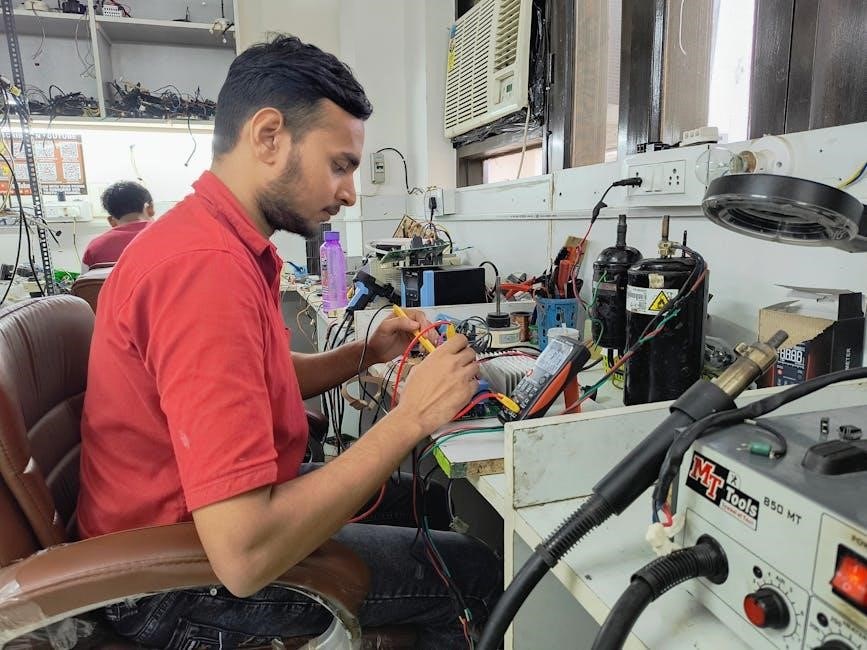
Begin by verifying the AC unit receives adequate power. Ensure the RV park pedestal or generator provides the correct voltage – typically 120V in North America – using a multimeter. Confirm the shore power cord is securely connected at both ends.
Inspect the dedicated circuit breaker within your RV’s electrical panel that supplies power to the air conditioner. A tripped breaker indicates an overload or short circuit. Reset it if necessary, but if it trips repeatedly, further investigation is crucial.
Also, check inline fuses located near the AC unit itself. These can blow due to power surges or component failures. Replacing a blown fuse with one of the correct amperage rating is essential for safe operation.
Tripped Breakers and Fuses
Repeatedly tripped breakers or blown fuses signal a problem beyond simple power fluctuations. Don’t just keep resetting or replacing them; identify the underlying cause. A tripped breaker protects the circuit from damage, indicating an overload or short.
Start by disconnecting all other appliances on the same circuit to isolate the AC unit. If the breaker still trips, the issue likely lies within the AC system itself. Check for loose wiring, faulty components like the compressor or fan motor, or a potential short circuit.
Fuses protect individual components. A blown fuse suggests that component has failed or is drawing excessive current. Replacing it without addressing the root cause will only result in another blown fuse.
Wiring Connections and Corrosion
Loose or corroded wiring connections are frequent culprits in Dometic AC malfunctions, disrupting the electrical flow and causing operational issues. Inspect all wiring connections within the AC unit and at the power source, ensuring they are tight and free from corrosion.
Corrosion, often appearing as a greenish or whitish residue, hinders conductivity and can lead to overheating. Clean corroded connections with a wire brush or electrical contact cleaner. Secure any loose connections with appropriate connectors or terminals.
Pay close attention to ground connections, as a poor ground can cause a variety of problems. Regularly checking and maintaining wiring prevents further damage and ensures safe, reliable operation of your Dometic AC system.
Cooling Performance Problems
Reduced cooling often stems from airflow restrictions, refrigerant issues, or component failures; diagnosing these requires checking for blockages and leaks within the system.
Low Cool Airflow
Insufficient cool air can be a frustrating issue, often stemming from a clogged air filter – a simple fix involving regular cleaning or replacement as part of preventative maintenance.
Beyond the filter, inspect the evaporator coil for dust accumulation, hindering airflow and reducing cooling efficiency. A blocked condensate drain line can also contribute, causing ice buildup and restricted air passage.
Check the blower fan’s operation; ensure it spins freely and at the correct speed. Obstructions within the ductwork should be investigated, and vents should be fully open. Addressing these points will restore optimal airflow and cooling performance within your Dometic AC system.
AC Unit Not Cooling Effectively
When your Dometic AC struggles to cool, begin by verifying the thermostat settings and ensuring it’s calling for cooling. A refrigerant leak is a serious concern, requiring professional diagnosis and repair – avoid attempting this yourself.
Capacitor failure is a common culprit, preventing the compressor from starting or running efficiently. Inspect the compressor itself for unusual noises or lack of operation. Check for iced-over evaporator coils, indicating restricted airflow or low refrigerant.
Ensure proper voltage is reaching the unit, as low voltage can significantly reduce cooling capacity. Addressing these potential issues will help restore effective cooling performance.
Refrigerant Leaks (Identifying & Addressing)
Detecting refrigerant leaks requires specialized equipment and knowledge; DIY attempts are strongly discouraged due to environmental and safety concerns. Signs include consistently weak cooling, ice buildup on the evaporator coils, and a hissing sound near the AC unit.
Professional technicians use leak detectors to pinpoint the source of the leak, often at connections or the evaporator/condenser coils; Repairing leaks typically involves brazing or replacing the affected components, followed by a vacuum and recharge with the correct refrigerant type.
Never release refrigerant into the atmosphere; it’s illegal and harmful. Always rely on certified HVAC professionals for refrigerant handling and leak repairs.
Dometic Thermostat Troubleshooting
Dometic thermostat issues range from unresponsive units to inaccurate readings, often involving the 4-button models, requiring checks of connections and sensor functionality.
Thermostat Not Responding
A non-responsive Dometic thermostat can stem from several causes, beginning with a simple check of the power supply to the unit itself. Verify the thermostat receives voltage; a multimeter is invaluable for this step.
Inspect the wiring connections at both the thermostat and the AC unit, looking for loose connections or corrosion. Ensure the thermostat is securely mounted and not experiencing any physical interference.
Consider the possibility of a faulty thermostat; testing with a known working unit can quickly isolate the problem. Some users report issues with specific models, like those controlling multiple zones, requiring careful diagnostics. Remember to consult the Dometic website for potentially updated installation instructions, as older documentation may exist.
Incorrect Temperature Readings
Inaccurate temperature displays on your Dometic thermostat can lead to discomfort and inefficient cooling. First, ensure the thermostat isn’t directly exposed to sunlight or heat sources, which can skew readings. Check for obstructions blocking airflow around the sensor.
Calibration issues are possible, though less common; consult the Dometic manual for calibration procedures if available. For systems with multiple sensors, like those controlling front and rear AC units, verify each sensor’s functionality.
A failing thermostat or a wiring problem can also cause inaccurate readings. Users have reported issues with 4-button thermostats, suggesting potential internal component failure. Consider replacing the thermostat if other troubleshooting steps fail to resolve the issue.
Dometic 4-Button Thermostat Issues & Fixes
Dometic’s 4-button thermostats, while common, can present unique challenges. A frequent issue is unresponsive buttons, often requiring cleaning or replacement. Try gently cleaning the button contacts with isopropyl alcohol and a cotton swab.
If the display is malfunctioning, check the wiring connections for corrosion or looseness. Users have found success with simple fixes, like reseating the thermostat connector. However, internal component failure is common, necessitating thermostat replacement.
Ensure proper voltage supply to the thermostat. When replacing, verify compatibility with your AC unit. Online forums detail successful fixes, but a faulty unit may require professional attention.
Water Leakage & Drainage
Addressing water leaks involves checking condensate drain blockages and identifying the source of leaks from the AC unit itself, like the Dometic 320 pedestal.
Condensate Drain Blockages
Condensate drain blockages are a frequent cause of water leaks in Dometic AC units. The cooling process generates condensation, which should drain away efficiently. When this drain line becomes clogged with debris – dust, mold, or algae – water backs up and overflows, potentially causing damage inside your RV.
Locate the drain line, typically a small hose extending from the AC unit. Inspect it for kinks or obstructions. You can attempt to clear the blockage using a flexible wire or compressed air, being careful not to damage the line. Regularly cleaning or flushing the drain line as part of preventative maintenance can avoid these issues. Remember to disconnect power before any inspection or cleaning!
Persistent blockages may require professional attention to ensure proper drainage and prevent further water damage.
Leaks from the AC Unit Itself
Leaks originating directly from the Dometic AC unit demand immediate attention, as they indicate a more serious problem than simple condensation. These leaks can stem from several sources, including cracked drain pans, faulty seals around the unit’s housing, or issues with the refrigerant lines.
Carefully inspect the area around the AC unit for the source of the leak. Look for visible cracks or corrosion. A leak between the porcelain bowl and plastic pedestal, as discussed in forums regarding the Dometic 320 toilet, highlights the importance of seal integrity. If you suspect a refrigerant leak, do not attempt to repair it yourself; refrigerant handling requires specialized equipment and training.
Professional diagnosis and repair are crucial to address these leaks effectively and prevent further damage.
Component-Specific Troubleshooting
Targeted diagnostics pinpoint issues within key components: fan motors, capacitors, and compressors, often requiring replacement or professional repair for optimal AC function.
Forum discussions highlight common failures, like flush spring cartridges and thermostat connections, aiding focused troubleshooting efforts.
Fan Motor Problems
Diagnosing fan motor issues begins with verifying power supply and checking for obstructions. A failing fan motor often presents as reduced airflow or complete stoppage, impacting cooling efficiency. Listen for unusual noises – grinding or squealing – indicating potential bearing failure. Visually inspect the motor for signs of overheating, such as discoloration or a burning smell.
Testing the motor directly with a multimeter can confirm if it’s receiving power. If power is present but the motor doesn’t run, the motor itself is likely faulty and requires replacement. Remember to disconnect power before any inspection or repair work. Online forums frequently discuss Dometic AC components, offering insights into common motor failures and replacement procedures. Proper ventilation is crucial; a malfunctioning fan can lead to compressor overheating.
Always consult the Dometic service manual for specific model instructions.
Capacitor Failure
Capacitor failure is a frequent cause of Dometic AC issues, often presenting as the fan motor failing to start or running at reduced speed. These components store energy to help start and run the fan and compressor motors. A bulging or leaking capacitor is a clear visual indicator of failure, but sometimes the issue is more subtle.
Testing a capacitor requires a multimeter with capacitance testing capabilities. Disconnect power completely before handling any electrical components. A significantly lower capacitance reading than the specified value indicates a faulty capacitor. Replacement is relatively straightforward, but ensure the new capacitor has the correct microfarad (µF) rating and voltage. Online resources and RV forums often detail capacitor replacement procedures for various Dometic models.
Safety first: discharge the capacitor before handling!
Compressor Issues
The compressor is the heart of your Dometic AC system, and its failure signifies a major repair. Symptoms include the AC blowing warm air, unusual noises, or the unit cycling on and off rapidly. Diagnosing compressor problems often requires a qualified HVAC technician, as it involves checking refrigerant levels and electrical connections.
Refrigerant leaks, though mentioned in other sections, directly impact compressor performance. Low refrigerant forces the compressor to work harder, potentially leading to burnout. While some minor repairs might be possible, compressor replacement is often the most cost-effective solution. Remember, handling refrigerant requires EPA certification. Online forums discuss the complexities of Dometic AC repairs, emphasizing the need for professional assistance when dealing with compressor issues.
Professional diagnosis is highly recommended.
Toilet Related Issues (Dometic 320)
Dometic 320 toilet problems frequently involve leaks between the bowl and pedestal, often requiring flange ball seal replacement, as discussed in RV repair forums.
Dometic 320 Toilet Bowl to Pedestal Leaks
Leaks originating from the Dometic 320 toilet, specifically where the porcelain bowl meets the plastic pedestal, are a commonly reported issue among RV owners. Online forums indicate this often stems from a failing flange ball seal. Identifying the source of the leak is the first step; carefully inspect the connection point while flushing the toilet.
Repair typically involves replacing this seal, which can be sourced online or from RV parts suppliers. Determining the correct cartridge color is crucial, sometimes requiring removal of the existing cartridge for comparison. Some users suggest manually operating the flush lever while awaiting the correct replacement part.
Searching for a “repair kit” is a good starting point, but ensure it includes the flange ball seal. Remember to consult relevant RV forums for shared experiences and potential troubleshooting tips from other owners facing similar issues.
Flange Ball Seal Replacement
Replacing the flange ball seal on a Dometic 320 toilet is a common DIY repair to address leaks between the bowl and pedestal. Begin by shutting off the water supply to the toilet. Carefully disassemble the toilet, noting the position of all components for reassembly. Accessing the seal typically requires removing the toilet’s upper housing.
Once exposed, the old flange ball seal can be removed and replaced with a new one. Ensure the new seal is correctly seated to prevent future leaks. Reassemble the toilet in reverse order, paying close attention to alignment.
After reassembly, slowly restore the water supply and test for leaks. Online resources and RV forums often provide detailed visual guides to aid in this process, ensuring a successful repair.
Dometic Toilet Caution Light Troubleshooting
The Dometic toilet caution light often indicates a full holding tank or a system malfunction. Initially, verify the black water tank level; an overfull tank is the most frequent cause. If the tank isn’t full, the issue may stem from a faulty level sensor within the tank itself. Disconnecting and reconnecting the sensor can sometimes resolve intermittent problems.
Some users have explored disabling the light, but this is generally discouraged as it masks potential issues. Inspect the toilet’s wiring and connections for corrosion or damage.
RV forums suggest that occasionally, a reset of the toilet’s control board may be necessary, though this is less common.
Preventative Maintenance
Regularly cleaning or replacing air filters and coils is crucial for optimal Dometic AC performance, preventing issues discussed in forums regarding thermostats and toilets.
Regular Filter Cleaning/Replacement
Maintaining clean filters is paramount for efficient Dometic AC operation. Dust and debris accumulation significantly restricts airflow, forcing the unit to work harder and potentially leading to compressor strain. Inspect filters monthly, especially during peak usage seasons, and clean or replace them as needed. Foam filters can often be washed gently with mild soap and water, ensuring they are completely dry before reinstallation.
Disposable filters should be replaced entirely. Ignoring filter maintenance can result in reduced cooling capacity, increased energy consumption, and even component failure, mirroring concerns raised in online discussions about Dometic 320 toilets and thermostat issues. A clean filter ensures optimal performance and extends the lifespan of your AC system, contributing to a more comfortable and cost-effective RV experience.
Coil Cleaning
The evaporator and condenser coils require periodic cleaning to maintain optimal heat transfer. Dirt and grime buildup act as insulation, reducing the AC’s cooling efficiency. Use a commercially available coil cleaner specifically designed for HVAC systems, following the manufacturer’s instructions carefully. Gentle brushing with a soft-bristled brush can help loosen stubborn debris, but avoid bending the delicate fins.
Ensure the AC unit is powered off before cleaning. Neglecting coil cleaning can lead to decreased airflow, increased energy consumption, and potential compressor issues, similar to problems discussed regarding Dometic thermostats and toilet flange seals. Regular coil maintenance extends the AC’s lifespan and ensures consistent, reliable cooling performance throughout your travels.